
Should you try a continuous glucose monitor if you don’t have diabetes?
What two weeks wearing a CGM taught me about food, sleep and making personalised changes for better health
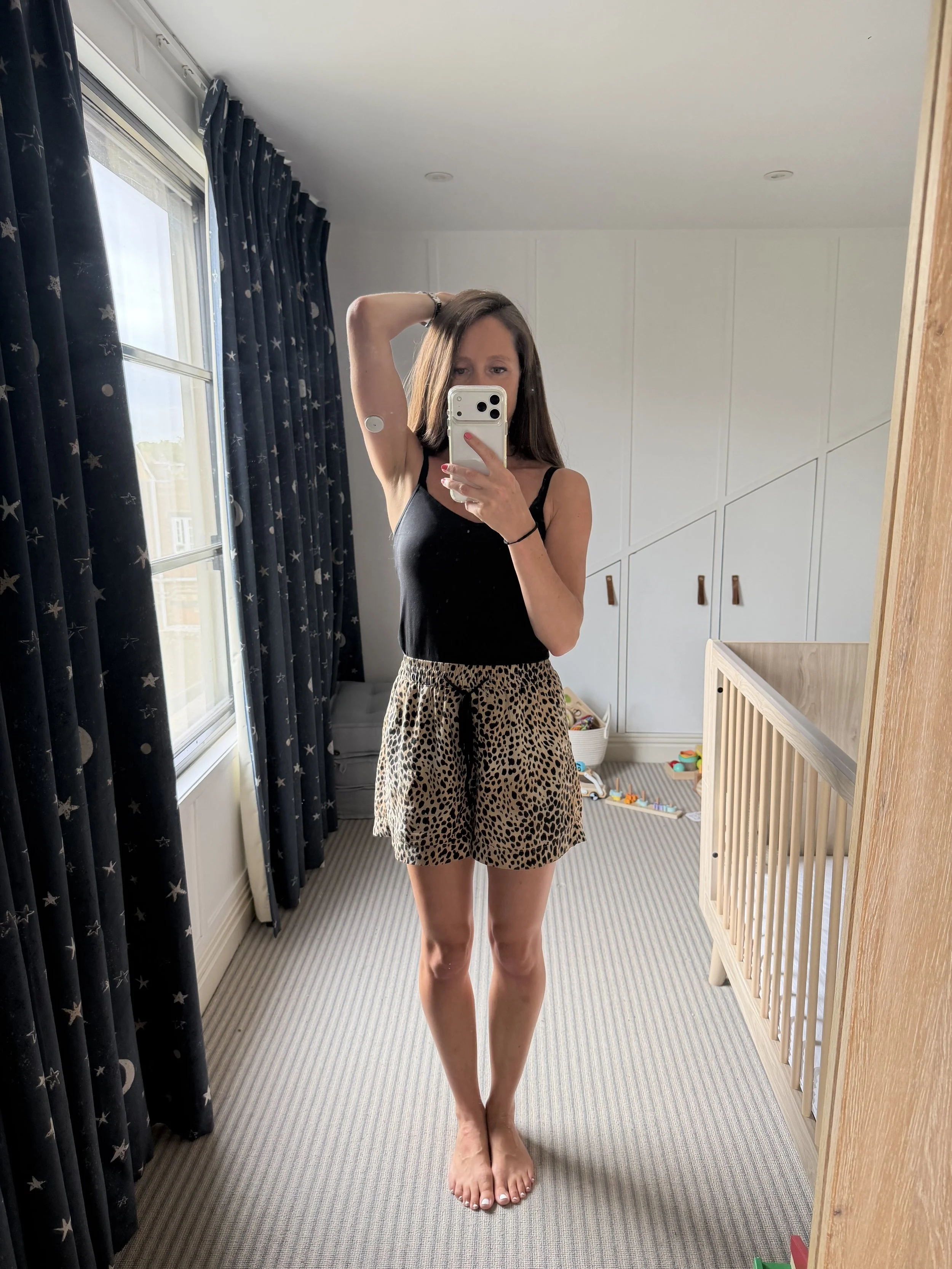
Day 1 with my CGM
I recently wore a continuous glucose monitor (CGM) for two weeks. As a nutritional therapist, I was curious about what the data might add to what I already knew about my appetite, energy, sleep and eating habits. I also have a family history of type 2 diabetes, so I was interested in a closer look at my own glucose patterns.
The most useful lesson wasn’t that certain foods were “good” or “bad”. It was how much context I needed to make sense of a line on a graph.
What does a CGM actually measure?
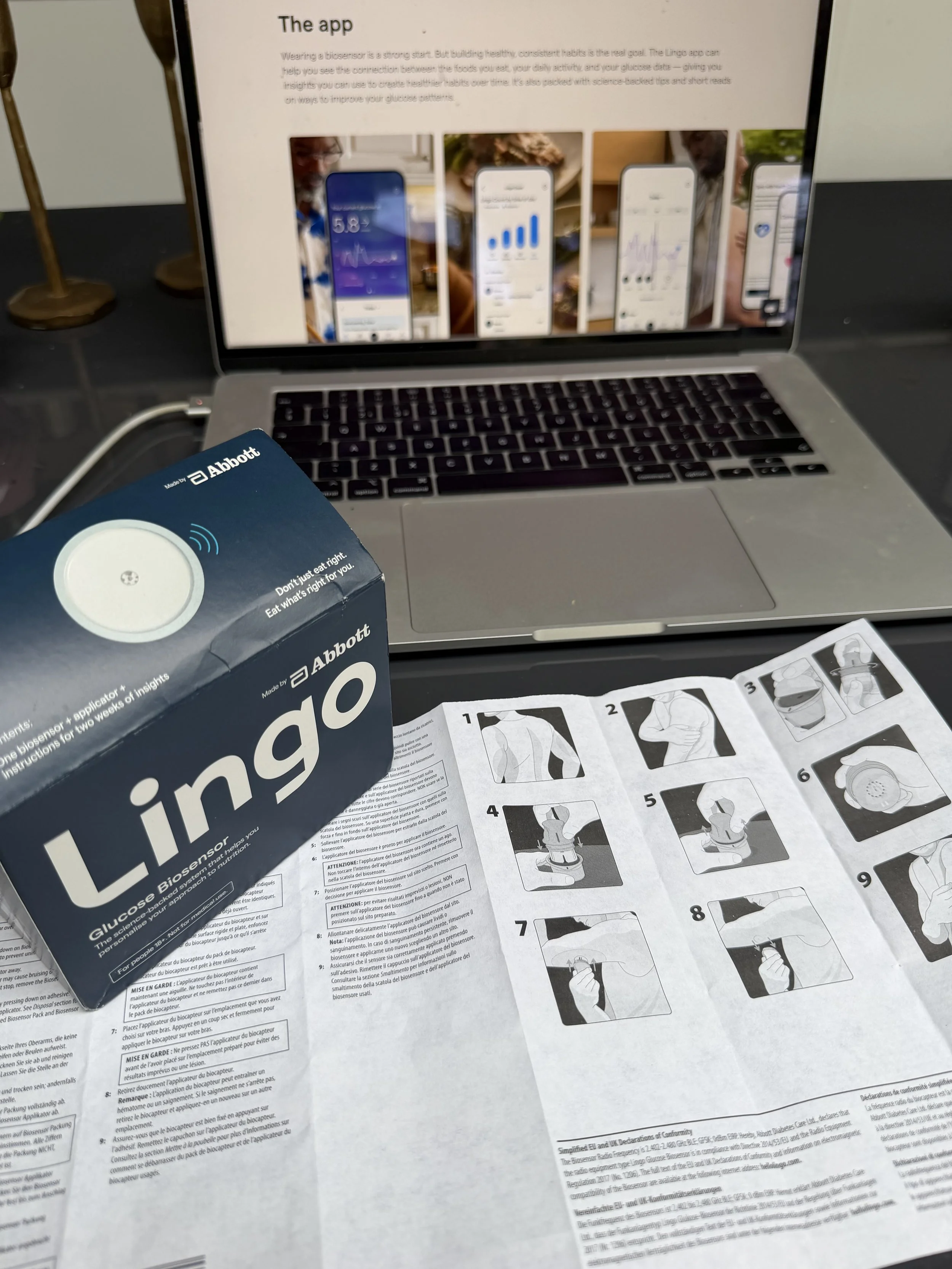
A CGM is a small sensor worn on the body that estimates glucose in the fluid just beneath the skin. Its app displays how that reading changes throughout the day and night. Because it measures interstitial rather than blood glucose, the readings can lag behind changes in the bloodstream and are not infallible.
For people with diabetes, CGM can be an important medical tool. It can help them and their healthcare team monitor glucose and guide treatment, including insulin management. Use in personalised nutrition is different. For someone without diabetes, a short period of monitoring might help them explore how meals, movement and daily routines relate to their glucose patterns. It does not diagnose diabetes or insulin resistance, and the number on the screen should never be treated as a verdict on a meal.
What I noticed during my two weeks
Sometimes my appetite had already given me the answer
I have long noticed that an oat-based breakfast, even with Greek yoghurt, nut butter and hemp seeds, often leaves me hungry again a couple of hours later. I tend to want more snacks throughout the day and can feel less able to cope with everyday stresses. Eggs generally keep me satisfied for longer.
On one morning after overnight oats, I saw more fluctuation in my CGM trace alongside that familiar feeling. The most useful learning was that I didn’t need a sensor to take my appetite seriously. The graph echoed something I had already noticed, although it couldn’t establish that glucose changes caused my hunger or reduced stress tolerance.
Glucose regulation and stress hormones interact, but a CGM doesn’t measure cortisol or explain every change in how we feel. Sleep, meal composition and the wider circumstances matter too. Oats are satisfying for plenty of people; for me, this was a reminder to pay attention to my own experience when choosing a breakfast that sees me through the morning.
A picnic lunch looked different from my usual lunch
I am generally good at making time for a substantial breakfast with protein, fibre and healthy fats. Lunch can be a different story when I am out with the children. During the summer holidays, I sometimes found myself grazing on picnic food and picking at leftovers from their lunch boxes instead of sitting down to a proper meal. (I suspect I am not the only parent who does this.)
At a picnic with friends and the children, my graph showed two larger afternoon rises followed by a dip. I had also noticed that my afternoons tended to be less steady than my mornings. The graph prompted a practical question: would making lunch as nourishing and satisfying as breakfast leave me feeling better through the afternoon? It was a useful nudge to look at my routine, not a diagnosis based on one picnic.
On a day I felt ill, familiar foods appeared to affect me differently
On one day, foods that would not normally catch my attention on the graph, including a quinoa and lentil salad, seemed to produce larger rises. Later that day I felt unwell with a virus and went to bed at around 8pm.
Illness is one possible influence on glucose readings. I cannot prove that the virus caused those rises, but the day reminded me why it would be misleading to label the salad a “problem food” on the basis of one trace. The same meal can appear different on different days.
My evenings raised more questions than answers
We often eat dinner with the children at about 5pm, and I am still breastfeeding overnight. I have noticed for some time that I often sleep better if I have a snack later in the evening after an early dinner. During the CGM experiment, nights without a later snack sometimes appeared less steady, with occasional low-looking readings around the time I woke and struggled to get back to sleep.
I would be careful about interpreting those readings. I placed the sensor on the arm I tend to sleep on, and pressure on a CGM can cause a falsely low overnight reading. Nor can a graph establish that glucose caused me to wake. Sleep, feeding, stress and ordinary changes in body temperature may all be relevant. The useful takeaway for me is simpler: a long gap between an early dinner and breakfast may not feel right for me at this stage of life. A balanced evening snack is something I can judge by how I feel, without treating the sensor as the final word.
I also noticed one evening when I felt hungry and saw a downward trend after an early dinner and an afternoon barbecue that included alcohol. Alcohol, food timing and breastfeeding could all be relevant; the graph alone could not separate them.
Why context matters, especially for women
I was breastfeeding, my menstrual cycle had not yet returned, and I was particularly sleep-deprived during these two weeks. Those details belong alongside my food notes. Lactation affects maternal metabolism, while insufficient sleep can alter glucose regulation. Neither gives a simple formula for interpreting an individual CGM trace.
For someone whose cycle has returned, glucose patterns may also vary across the menstrual cycle. If comparing phases is the goal, a two-week snapshot may miss part of that picture; following a complete cycle could be more informative. This is a reason to interpret the data thoughtfully, rather than a rule that everyone needs to wear a sensor for four weeks.
Exercise, stress, illness, alcohol, meal timing and what else is eaten with a food can all change what a graph looks like. A sweet food eaten after a substantial meal may produce a different trace from the same food eaten alone. It is tempting to run little experiments, but real life rarely holds all the other variables constant.
Is a CGM useful in personalised nutrition?
For some people, seeing glucose patterns alongside a food and symptom diary can help explore questions about hunger, energy, mood and concentration, while making dietary and lifestyle advice more tangible. Research into CGM-supported behaviour change is promising, although evidence for long-term benefits in people without diabetes remains limited.
A qualified nutritional therapist with appropriate CGM training can help interpret those patterns alongside your health history, symptoms, meals, sleep, stress and movement. That includes recognising sensor limitations, avoiding unnecessary food restrictions and identifying when medical assessment is needed.
CGM can also offer complementary information to tests such as HbA1c. While HbA1c reflects average blood glucose over roughly three months, a CGM shows daily patterns around meals and overnight. These readings can inform personalised advice alongside your GP’s assessment, but cannot diagnose diabetes or insulin resistance.
It won’t suit everyone. If monitoring increases anxiety or encourages restrictive eating, it may be unhelpful. Concerns about diabetes risk or repeated low readings should be discussed with your GP.
Used thoughtfully, I believe a CGM can have a useful role in a preventative approach to personalised nutrition. For me, it was most valuable when it confirmed something I had already noticed, or prompted a better question: Am I making time for lunch? Does a later snack help when dinner is early? How did I sleep? Was I becoming unwell?
The goal is not a perfectly flat graph. It is to use information, when useful, to make food and lifestyle choices that work in real life.
This article reflects my personal experience and is for general information; it is not a substitute for individual medical advice.
Further reading
NICE: Type 2 diabetes in adults: blood glucose management (https://www.nice.org.uk/guidance/ng28/chapter/Blood-glucose-management)
Klonoff et al. (2022): Use of continuous glucose monitors by people without diabetes (https://pmc.ncbi.nlm.nih.gov/articles/PMC10658694/)
Richardson et al. (2024): CGM feedback as a behaviour change tool: systematic review and meta-analysis (https://pmc.ncbi.nlm.nih.gov/articles/PMC11668089/)
Lin et al. (2023): Blood glucose variation across the menstrual cycle (https://www.nature.com/articles/s41746-023-00884-x)
Mensh et al. (2013): Sleeping position and CGM readings (https://pmc.ncbi.nlm.nih.gov/articles/PMC3879750/)
Barrow, Bell and Bell (2020). Transforming personalized nutrition practice. Nutrition Reviews. Read source
Wyatt et al. (2021). Postprandial glycaemic dips predict appetite and energy intake in healthy individuals. Nature Metabolism. Read source
Breymeyer et al. (2016). Subjective mood and energy levels on high- and low-glycaemic-load experimental diets. Appetite. Read source
Nilsson et al. (2009). Effects of differences in postprandial glycaemia on cognitive functions in healthy middle-aged subjects. European Journal of Clinical Nutrition. Read source
Gunderson et al. (2012). Lactation intensity and postpartum maternal glucose tolerance and insulin resistance in women with recent gestational diabetes. Diabetes Care. Read source
Buxton et al. (2010). Sleep restriction for one week reduces insulin sensitivity in healthy men. Diabetes. Read source
De Feo et al. (1989). Contribution of cortisol to glucose counterregulation in humans. American Journal of Physiology. Read source
NIDDK. The A1C Test and Diabetes. Read source