
An aromatic bone broth recipe, plus a Vietnamese-inspired noodle bowl.
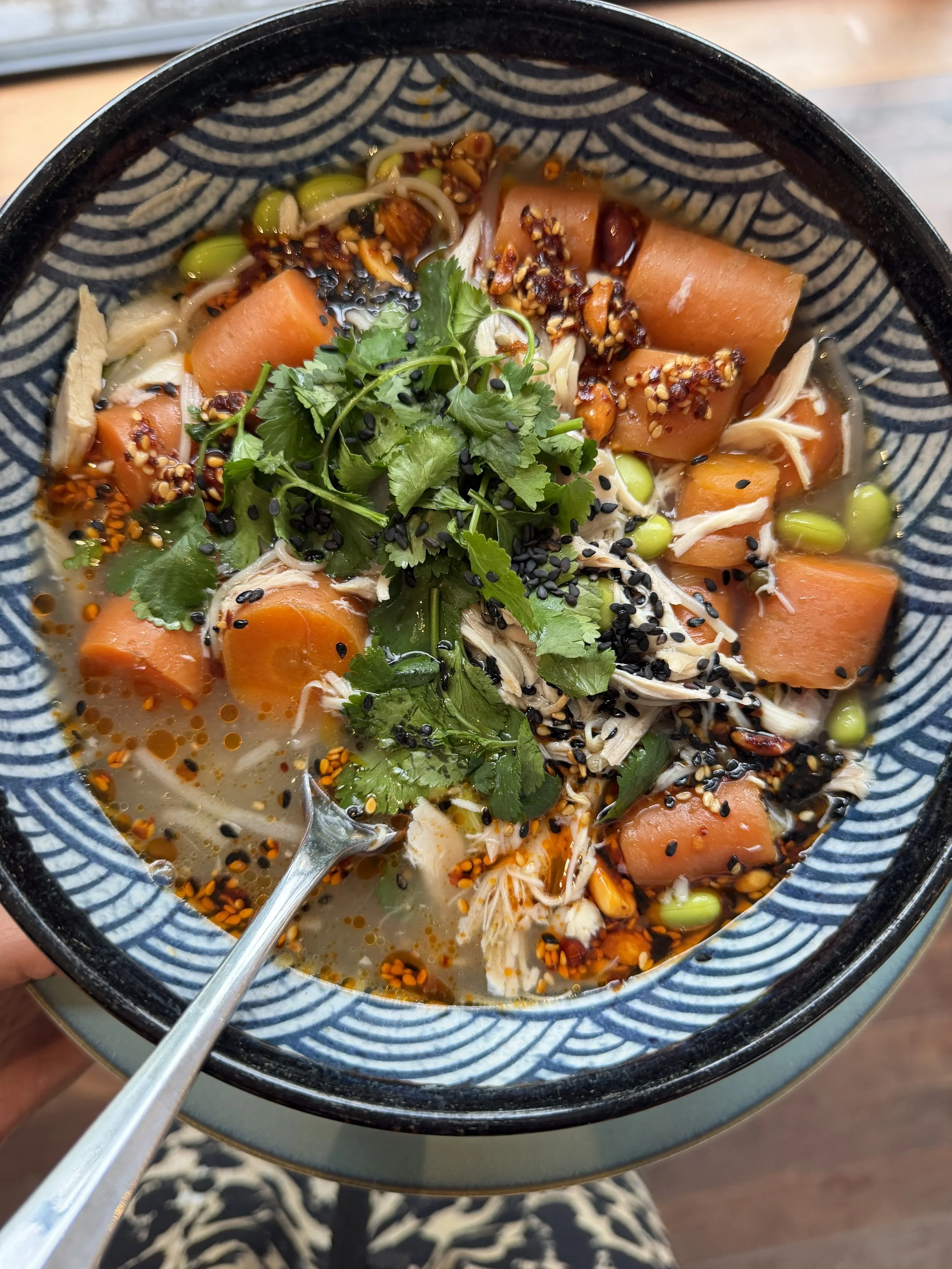
There’s a point in autumn when all I want for lunch is something warm, preferably eaten from a deep bowl with both hands wrapped around it.
With the rain arriving and my little one picking up yet another bug, we’re very much there in our house. The tissues are out, the nights have been interrupted, and a pot of broth feels like a very welcome thing to have on the go.
There’s something familiar about reaching for soup when someone is feeling poorly. From a grandmother’s chicken soup to the many broths and stocks simmered in kitchens around the world, these are foods with a long history of feeding and caring for people.
I first shared some broth-making tips while stocking the freezer before my son was born. It was one of those small preparations I hoped would make feeding myself a little easier in the weeks ahead. But it’s something I come back to well beyond postpartum, particularly at this time of year.
There’s comfort in the making, too. Ginger, garlic and whole spices gently simmering away, filling the kitchen with the promise of something good to eat.
Flavours that have stayed with me
My love of these flavours really grew during my years living in Sydney, where there’s such a wonderful variety of Asian food. Being closer to that part of the world also gave me the chance to travel to places like Vietnam and Thailand, and I was lucky enough to take cooking classes along the way.
Those flavours have stayed with me. Fresh ginger, generous handfuls of herbs, warming spices and a good squeeze of lime find their way into so much of my cooking. They’re the inspiration behind this broth and the noodle bowl below.
You can adjust the spices to your taste, or keep the base simpler if you want to use it across lots of different dishes.
A useful staple to have tucked away
One of my favourite things about broth is how much you can do with it.
A mugful makes a warming savoury drink. A few ladles become the start of a soup, stew or risotto. You can use it to cook grains, add depth to beans and lentils, or turn a handful of fridge leftovers into lunch.
I like freezing it in a mixture of sizes: larger portions for a meal, and little cubes for the moments when a pan of something needs a bit more flavour. It’s a satisfying way to get another meal out of a roast chicken carcass, too.
What does broth bring to the bowl?
Alongside the flavour, broth contributes fluid, some protein and varying amounts of minerals, including electrolytes. Exactly how much depends on the ingredients, seasoning and how concentrated you make it.
As connective tissue cooks, collagen breaks down into gelatin, which gives some broths that lovely wobble once chilled. The amount of protein and individual amino acids varies considerably between batches. I think of broth as a useful contribution to a meal, with chicken, beef, tofu or beans adding something more substantial.
That’s one reason I love turning it into a noodle bowl. There’s protein from your chosen topping, carbohydrates from the noodles, and plenty of opportunity to add fibre, flavour and antioxidants in the form of vegetables and fresh herbs. It’s also a lovely example of building nourishment by adding things in: a handful of greens here, some edamame there, whatever you have available.
When someone in the house is under the weather, a warm, savoury bowl can feel particularly appealing. For me, much of its value is wonderfully practical: something comforting to eat, a way to take in fluid, and a head start on dinner when energy for cooking is in short supply.
My aromatic bone broth / meat stock
A flexible recipe for turning chicken carcasses or beef bones into a beautifully flavoured broth.
The quantities below are a starting point. Adjust them to suit the size of your pot and how strongly spiced you like your broth. You don’t need every spice on the list. Use what you have, and feel free to experiment.
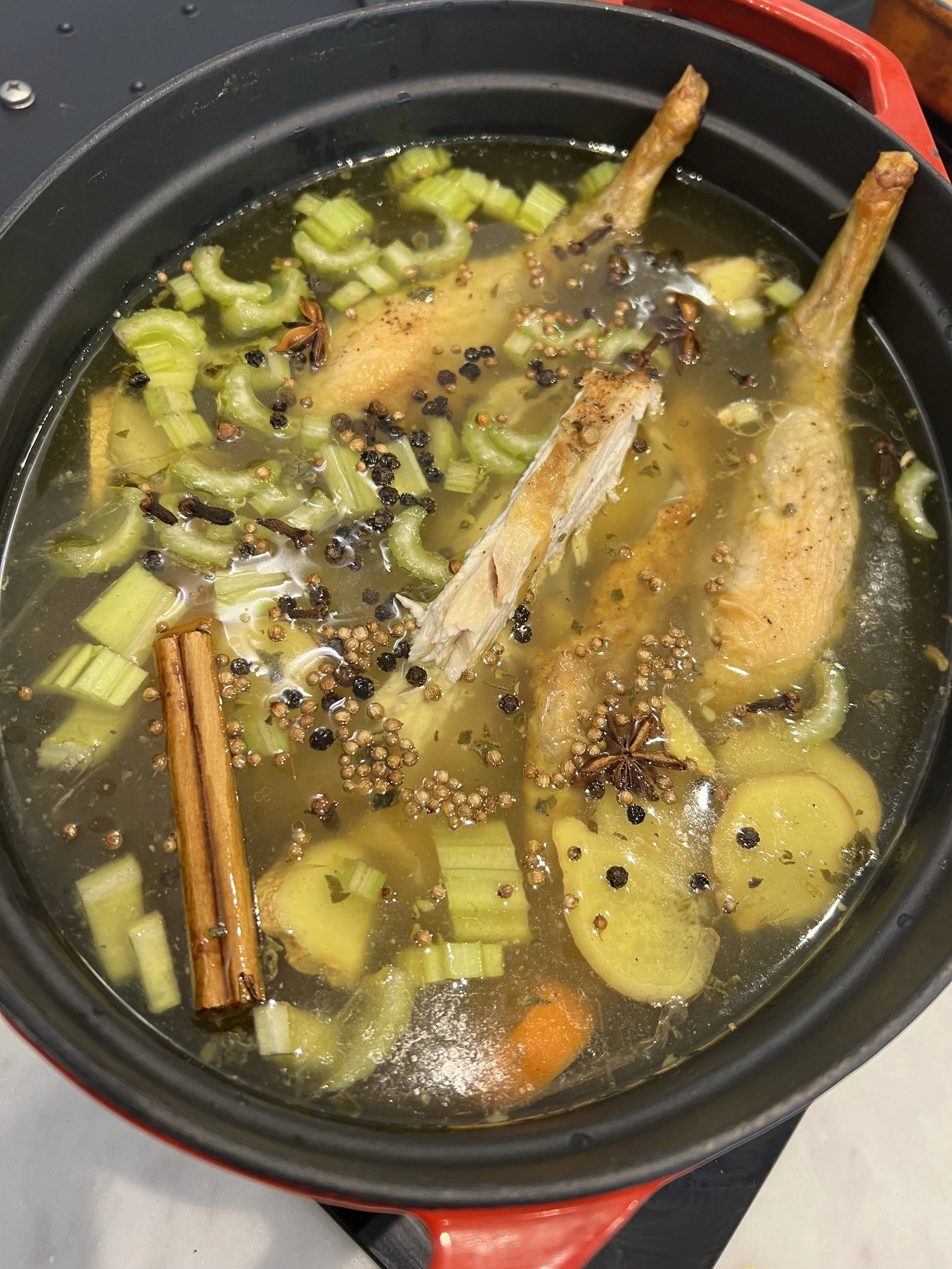
Ingredients
1–2 chicken carcasses (preferably organic), with a little meat still attached, or approximately 1–1.5kg grass-fed beef stock bones, cut into manageable pieces by your butcher
Cold water (preferably filtered), enough to just cover the bones
1 large onion, roughly chopped
2 carrots, roughly chopped
2 celery sticks, roughly chopped
4 whole garlic cloves, lightly crushed
A small handful of fresh coriander, including the stalks
A thumb-sized piece of fresh ginger, sliced
1 cinnamon stick
2–3 star anise
3–5 cloves
1 tsp whole black peppercorns
1 tsp coriander seeds
1–2 tbsp apple cider vinegar, optional
Salt, to taste
Method
Put the bones into a large stockpot. Breaking a chicken carcass into smaller pieces can help it fit more snugly. Add enough cold water to just cover.
Add the vegetables, garlic, fresh coriander, ginger, whole spices and vinegar, if using. You can add a little salt now or season at the end.
Bring to the boil, then promptly reduce the heat to a very gentle simmer. Skim off any foam that rises to the surface.
Simmer gently for at least 3 hours. For a longer-cooked broth, continue for several more hours, checking regularly and topping up with water as needed to keep the bones submerged. Beef bones generally benefit from a longer cooking time than chicken.
Carefully strain through a fine metal sieve into a clean pan or heatproof container. Press the softened vegetables gently with a wooden spoon to release their flavoursome juices. Discard the bones and whole spices.
Taste and adjust the seasoning. If the flavour is too concentrated, add a little water.
A few helpful notes
Leave a little meat on the bones.
It adds depth of flavour. For beef broth, a mixture of joints and marrow bones works well.
Starting with a whole chicken?
Gently poach it until thoroughly cooked. Check the thickest parts of the breast and thigh, avoiding the bone, with a food thermometer: aim for 75°C for at least 30 seconds. Lift it out carefully and, once cool enough to handle, remove the meat. Return the bones to the pot to continue simmering. Use the meat straight away or cool and refrigerate promptly.
Season lightly if you’re making the noodle bowl.
Soy sauce adds salt later, so it helps to keep the base broth lightly seasoned.
Keep an eye on the pot.
A long simmer needs regular checks. Don’t leave a hob simmering unattended or while you sleep.
Cooling and storage
Divide the strained broth into smaller, shallow containers to help it cool quickly. An ice-water bath around the containers can speed this up.
Refrigerate within 1–2 hours and use within 48 hours, or freeze promptly in labelled portions. Leave some space in containers for the liquid to expand.
For smaller portions, freeze the broth in ice cube trays, then transfer the frozen cubes to a labelled freezer bag or container. They’re handy for adding flavour to sauces, grains, beans and other cooking.
Defrost in the fridge and reheat only the amount you need until steaming hot throughout. Reheat once.
A layer of fat may form as the broth chills. Keep it or skim it off according to your preference.
Vietnamese-inspired noodle broth
Serves 2
Give me rice noodles, fragrant broth, plenty of herbs and a generous squeeze of lime, and I’m happy.
This is one of my favourite ways to use the broth. It’s a flexible sort of meal: keep the chilli out for anyone who prefers it mild, add more noodles for a bigger appetite, or pile in extra greens.
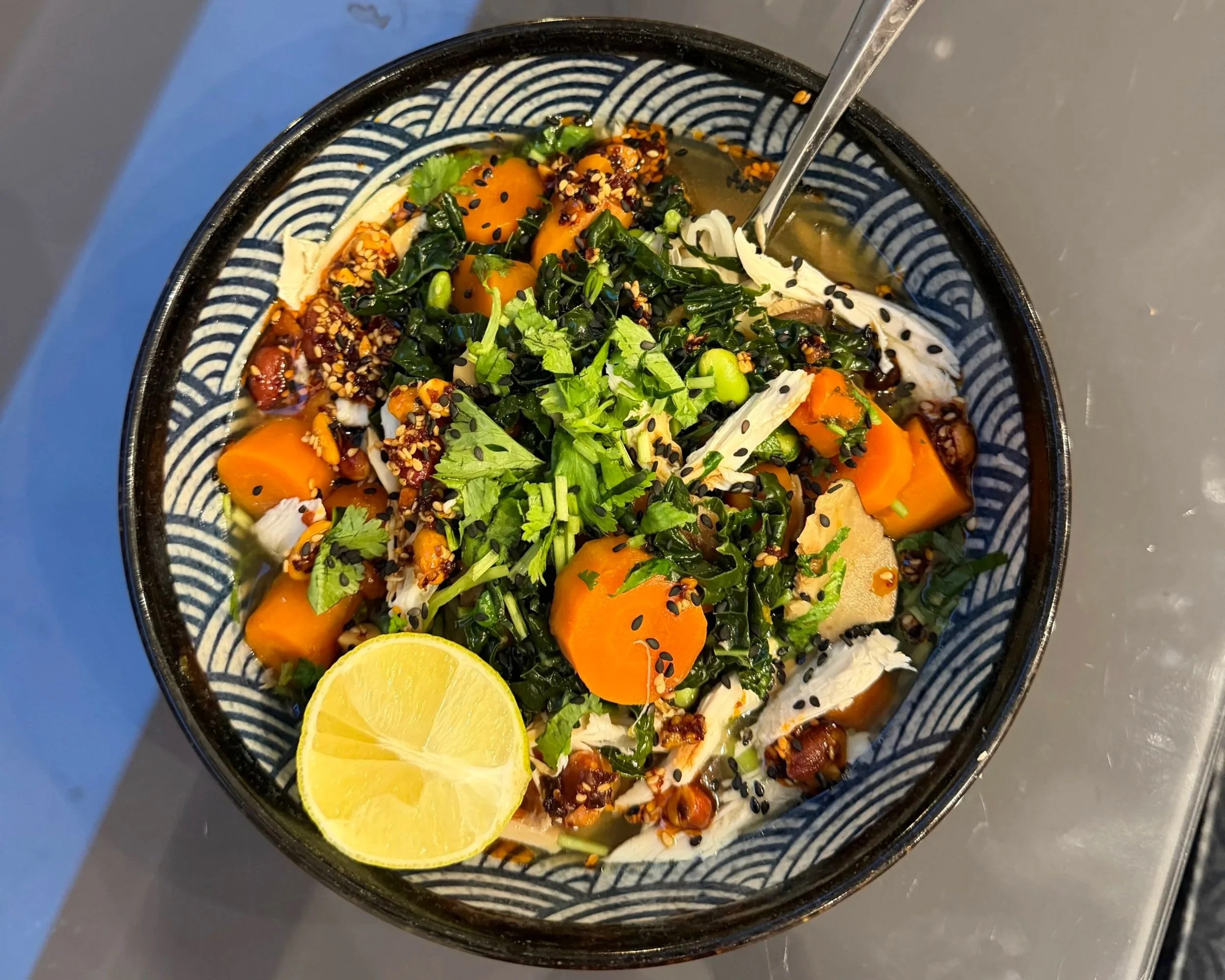
Ingredients
800ml–1 litre prepared aromatic broth
½ red onion, thinly sliced
2 tbsp soy sauce, or to taste
1 tsp each of ginger and garlic paste
Up to 1 tbsp sriracha, to taste
A grind of black pepper
2 large handfuls of fresh beansprouts
Rice noodles, enough for 2, according to appetite and packet guidance
Shredded cooked chicken, cooked sliced steak or tofu
Fresh coriander and mint
Thai basil, if available
Lemon or lime wedges
Optional extras: sliced red chilli, a drizzle of chilli oil or Japanese rayu, shredded carrot or cabbage, thinly sliced courgette, finely chopped cavolo nero or edamame beans.
Method
Pour the broth into a saucepan. Add the red onion, soy sauce, sriracha and black pepper. Simmer for approximately 10 minutes.
Add any extra vegetables, allowing enough time for them to cook. Follow packet instructions for frozen edamame.
Meanwhile, cook the rice noodles separately according to the packet instructions, then drain.
Add the beansprouts to the broth and cook thoroughly until piping hot throughout, following any instructions on the pack.
Add shredded cooked chicken or tofu and heat through thoroughly. Alternatively, cook a steak separately and slice it for serving.
Divide the noodles between two bowls. Ladle over the hot broth, vegetables and your chosen protein.
Finish generously with coriander, mint and Thai basil, if you have it. Add a good squeeze of lemon or lime, then chilli or a little chilli oil to taste. Finely chopped spring onions also go well.
Make it your own
For steak: I like a simple marinade of garlic granules, black pepper and a little soy sauce. Use a whole, intact steak and cook to your preference, then slice thinly. I prefer to sear the outside and leave the centre rare.
For a milder family version: leave the sriracha and chilli oil out of the pan and add them to individual bowls at the table.
For a vegetarian version: use vegetable or mushroom stock in place of the bone broth and add tofu or edamame (soy beans).
To dial up the umami: add a bit of miso paste, tahini or even peanut butter
To add a bit of texture: sprinkle with sesame seeds, chopped peanuts, crispy seaweed or crispy onions
Extra protein: add some soy beans or a whisked egg
Make a batch, tuck some away, and you’ve got the beginnings of a few very welcome meals for the cooler days ahead.
I hope this brings a little warmth to your kitchen. If you make it, I’d love to hear what ends up in your bowl!
Natasha x